

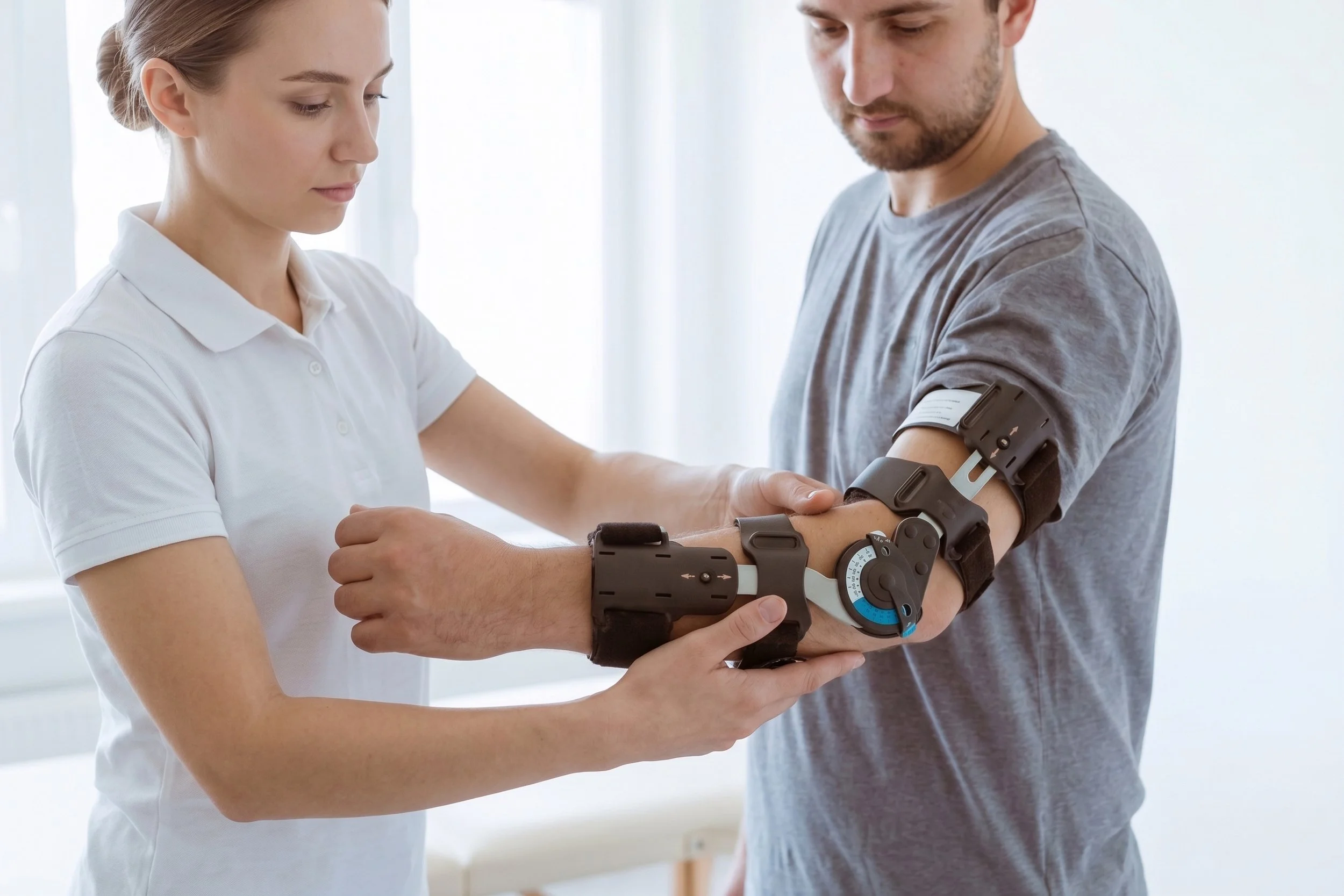
If you've been told you may need an orthotic, you probably have questions.
What exactly is an orthotic? Is it the same thing as a brace? Will it help with pain? How long will you have to wear it? Will insurance pay for it?
Orthotics can be used for many different reasons, from helping improve alignment and stability to supporting a weakened body part or helping someone move more safely and comfortably.
At Rise Orthotics and Prosthetics, we provide customized orthotic solutions based on each patient's needs, condition, activity level, and goals.
Here are answers to some of the most common questions patients ask about orthotics.
Important: Orthotic treatment is individualized. The appropriate device depends on your diagnosis, anatomy, functional needs, and goals. A qualified healthcare provider or orthotist can determine whether an orthosis is appropriate for you.
1. What Are Orthotics?
Orthotics are externally applied devices designed to support, protect, align, prevent or assist movement of part of the body.
An individual orthosis may be designed for the:
Foot
Ankle
Knee
Hip
Spine
Wrist
Hand
Elbow
Shoulder
Neck
Orthoses can be used to help stabilize a joint, improve alignment, protect an area during healing, compensate for weakness, or assist with movement.
Some are worn temporarily following an injury or surgery, while others may be used for longer-term conditions.
2. What Is the Difference Between Orthotics and Braces?
The terms orthotic and brace are often used interchangeably, but "orthosis" is the broader medical term.
A brace is generally designed to support, stabilize, protect, or control movement of a body part.
Orthoses can include braces, but they can also include devices designed to assist movement, improve alignment, accommodate a deformity, or provide functional support.
For example, an ankle-foot orthosis (AFO) may help control ankle and foot positioning during walking. A knee orthosis may provide stability or limit certain movements.
The appropriate design depends on what the device is intended to accomplish.
3. What Does an Orthotist Do?
An orthotist is a healthcare professional who specializes in designing, fitting, and providing orthotic devices.
An orthotist evaluates your physical condition and functional needs and considers how an orthosis can support your treatment.
The process may include:
Reviewing your medical history
Evaluating your movement
Examining the affected body part
Taking measurements
Taking a digital scan or mold when appropriate
Selecting materials and components
Designing or customizing the orthosis
Fitting the device
Making adjustments
Monitoring your progress
Your orthotist may also work closely with your physician, physical therapist, occupational therapist, or other members of your healthcare team.
4. Who Needs Orthotics?
Orthotics may be appropriate for people with a wide range of conditions and functional needs.
They may be used by children, adults, and older adults.
An orthosis may be considered for someone experiencing:
Muscle weakness
Joint instability
Neurological conditions
Foot or ankle deformities
Spinal conditions
Arthritis
Sports-related injuries
Post-surgical needs
Developmental conditions
Gait abnormalities
Problems with balance or mobility
Needing an orthosis doesn't necessarily mean you have a severe medical condition. Sometimes a relatively small change in support or alignment can make everyday movement easier or safer.
5. How Do I Know If I Need an Orthotic?
There isn't one symptom that means you need an orthosis.
You may want to ask your doctor or orthotist about orthotic treatment if you are experiencing:
Difficulty walking
Instability
Weakness
Abnormal positioning of a joint
Repeated falls
Difficulty controlling a limb
Pain associated with movement
A condition affecting your gait
Difficulty performing daily activities
A need to protect a joint or body part while it heals
An evaluation is the best way to determine whether an orthosis may help.
6. What Conditions Can Orthotics Help?
Orthoses can be used in the management of many different conditions.
Depending on the type of orthosis, they may be used for people with:
Cerebral palsy
Stroke-related weakness
Multiple sclerosis
Spina bifida
Muscular weakness
Arthritis
Scoliosis
Foot and ankle deformities
Joint instability
Neurological disorders
Sports injuries
Post-surgical conditions
Developmental conditions
An orthosis does not necessarily treat the underlying disease. Instead, it may help manage functional effects of a condition by providing support, stability, alignment, protection, or assistance with movement.
7. What Are the Different Types of Orthotics?
There are many different types of orthoses.
Foot Orthoses
Foot orthoses are designed to support or influence foot positioning and may be used to address specific biomechanical or functional needs.
Ankle-Foot Orthoses (AFOs)
AFOs extend from below the knee around the ankle and foot. They are commonly used to provide stability or help control foot and ankle movement.
Knee Orthoses
Knee orthoses may provide stability, restrict certain movements, or support the knee following injury or surgery.
Knee-Ankle-Foot Orthoses (KAFOs)
KAFOs extend from the thigh through the knee and ankle to the foot. They may be used when support is needed across multiple joints.
Spinal Orthoses
Spinal orthoses can support or help control movement of portions of the spine.
Upper-Extremity Orthoses
These may be designed for the hand, wrist, elbow, or shoulder and can provide positioning, stability, protection, or functional assistance.
The right type of orthosis depends on the patient's individual needs.
8. What Is a Custom Orthosis?
A custom orthosis is designed specifically for an individual patient.
Rather than selecting a standard size from a shelf, the orthotist evaluates your anatomy and creates the device around your measurements and treatment requirements.
Custom orthoses may be particularly useful when a patient has:
A significant deformity
Unusual anatomy
Complex functional needs
A need for precise control or positioning
Difficulty fitting into standard devices
Custom fabrication can also allow the orthotist to modify materials, padding, components, and design to address specific patient needs.
9. What Is the Difference Between Custom and Off-the-Shelf Orthotics?
An off-the-shelf orthosis is manufactured in standard sizes and configurations.
A custom orthosis is designed specifically for the individual.
Neither is automatically better for every patient.
An off-the-shelf device may be appropriate when a patient's needs can be adequately addressed with a standard design.
A custom device may be appropriate when the patient's anatomy, condition, or functional requirements call for a more individualized solution.
Your orthotist can help determine which approach is appropriate.
10. How Do Orthotics Work?
Orthoses can work in several different ways depending on their design.
An orthosis may:
Support a weak joint
Limit unwanted movement
Improve positioning
Assist movement
Stabilize a limb
Protect an injured area
Redistribute pressure
Help improve alignment
Provide a more stable base for movement
For example, an AFO may help control the position of the foot and ankle during walking.
The design is based on what the patient needs the device to accomplish.
11. Can Orthotics Help With Pain?
Orthoses may help reduce pain for some patients, depending on the underlying cause of the pain and the purpose of the device.
For example, an orthosis may help by providing support, limiting an aggravating movement, redistributing pressure, or improving positioning.
However, an orthosis isn't appropriate for every type of pain.
Persistent or unexplained pain should be evaluated by a healthcare professional so that the underlying cause can be identified.
If an orthosis causes new or worsening pain, pressure, or skin irritation, contact your orthotist.
12. Can Orthotics Help Me Walk Better?
They can help some patients improve stability, positioning, or control during walking.
For example, an AFO may help a person who has difficulty controlling their ankle or lifting the front of the foot during walking.
Depending on the individual, an orthosis may help with:
Foot clearance
Stability
Alignment
Balance
Control of unwanted movement
Energy efficiency
Confidence during walking
The goal isn't necessarily to make everyone walk the same way. The goal is to provide the support or assistance needed for that particular person's movement pattern and functional goals.
13. How Long Does It Take to Get Used to Orthotics?
It can take time to adjust to a new orthosis.
Your body may need to become accustomed to:
The weight of the device
Changes in positioning
New pressure patterns
Changes in movement
Different footwear
New walking mechanics
Your orthotist may recommend gradually increasing wear time rather than immediately wearing the device all day.
Follow the wear schedule provided for your specific orthosis.
If you experience significant pain, persistent redness, blisters, numbness, or skin breakdown, stop and contact your orthotist or healthcare provider for guidance.
14. How Long Do Orthotics Last?
There isn't a single lifespan for every orthosis.
How long a device lasts depends on:
The type of orthosis
Materials
Frequency of use
Activity level
Growth
Changes in body size or shape
Wear and tear
Changes in the patient's condition
Children may outgrow orthoses before the device becomes physically worn out.
Adults may need a replacement if the device becomes damaged, no longer fits properly, or no longer provides the support they need.
Regular follow-up can help determine when an orthosis needs adjustment, repair, or replacement.
15. Does Insurance Cover Orthotics?
Many insurance plans provide coverage for medically necessary orthotic devices, but coverage varies.
Your insurance company may have requirements involving:
Medical necessity
A prescription
Prior authorization
Specific diagnoses
Approved providers
Deductibles
Coinsurance
In-network requirements
Frequency or replacement limits
Medicare and private insurance plans may have different rules.
Before receiving an orthosis, ask your provider to verify your benefits and explain any expected out-of-pocket costs.
16. How Much Do Orthotics Cost?
The cost of an orthosis varies considerably depending on the type of device and how it is made.
Factors can include:
Custom vs. off-the-shelf design
Materials
Components
Complexity
Fabrication requirements
Adjustments
Insurance coverage
A simple off-the-shelf device may cost substantially less than a highly customized orthosis.
Rather than comparing prices without considering the design and purpose of the device, ask your orthotist what type of orthosis is appropriate for your condition and what your expected financial responsibility will be.
17. How Are Custom Orthotics Made?
The process varies depending on the type of orthosis.
Your orthotist may use:
Physical measurements
Molds or casts
Digital scanning
Movement assessments
Computer-aided design
Custom fabrication techniques
The orthotist uses this information to create a device designed around your anatomy and functional requirements.
Once the device is ready, you'll return for a fitting.
Your orthotist checks the fit, comfort, alignment, and function and makes adjustments as needed.
18. Can Children Wear Orthotics?
Yes. Orthoses are commonly used in pediatric care.
Children may need orthotic devices for conditions affecting development, muscle strength, movement, alignment, or stability.
Pediatric orthoses may be used for children with conditions such as:
Cerebral palsy
Spina bifida
Developmental conditions
Neuromuscular disorders
Foot and ankle deformities
Gait abnormalities
Children are still growing, so their orthotic needs can change quickly.
Regular follow-up is particularly important to make sure the device continues to fit appropriately.
19. Can Orthotics Help After an Injury or Surgery?
Orthoses may be prescribed during recovery from certain injuries or surgical procedures.
Depending on the situation, an orthosis may help:
Protect a healing area
Restrict movement
Provide stability
Support weakened tissues
Gradually return movement
Assist mobility during rehabilitation
The appropriate device and duration of use depend on the specific injury or procedure and the recommendations of your healthcare team.
20. When Should I See an Orthotist?
Consider asking your physician about an orthotic evaluation if you have a condition affecting your movement, stability, alignment, or ability to perform everyday activities.
You may also want to see an orthotist if:
Your current orthosis no longer fits
Your device is causing discomfort
Your skin is becoming irritated
Your condition has changed
Your mobility has changed
You have outgrown a device
Your orthosis is damaged
You're having difficulty performing activities you previously could do
An orthotic evaluation can help determine whether you need a new device, an adjustment, a repair, or a different approach altogether.
What Should I Do If My Orthotic Hurts?
An orthosis may feel different when you first begin wearing it, but significant or persistent pain isn't something you should simply tolerate.
Pay attention to:
Redness that doesn't resolve
Blisters
Sores
Pressure points
Numbness
Swelling
New pain
Changes in your walking pattern
Contact your orthotist if you notice these problems.
A small adjustment to the device may sometimes make a significant difference in comfort and function.
How Do I Take Care of My Orthosis?
Proper care depends on the type of device.
Your orthotist will provide instructions specific to your orthosis, including how to:
Clean it
Dry it
Store it
Inspect it
Identify signs of wear
Protect straps and fasteners
Determine when it needs service
Don't modify or cut an orthosis yourself unless your healthcare provider specifically instructs you to do so.
Orthotics Are About More Than a Device
An orthosis isn't simply something you put on your body.
The right device should be selected around you—your condition, anatomy, movement, lifestyle, activities, and goals.
For one person, that might mean improving stability while walking. For another, it might mean protecting a healing joint, supporting a child's development, improving positioning, or making everyday activities easier.
At Rise Orthotics and Prosthetics, our orthotic team works with patients and their healthcare providers to evaluate individual needs and develop customized orthotic solutions.
If you're experiencing difficulty with movement, stability, alignment, or an existing orthosis no longer fits the way it should, talk with your healthcare provider about whether an orthotic evaluation may be appropriate.
Rise Orthotics and Prosthetics is here to help you understand your options and find the right support for your individual needs.
Contact Rise Orthotics and Prosthetics in Asheville, NC for more information.
Rise Orthotics and Prosthetics delivers custom orthotic and prosthetic care centered on you. Our approach blends patient‑centric care, collaborative teamwork, and creative problem‑solving to design solutions that fit your life and support your goals. CONTACT US
Located in Asheville, we proudly serve the greater Western North Carolina area, including Hendersonville, Waynesville, Black Mountain, Brevard, Marion, Morganton, Sylva, Weaverville and more.