

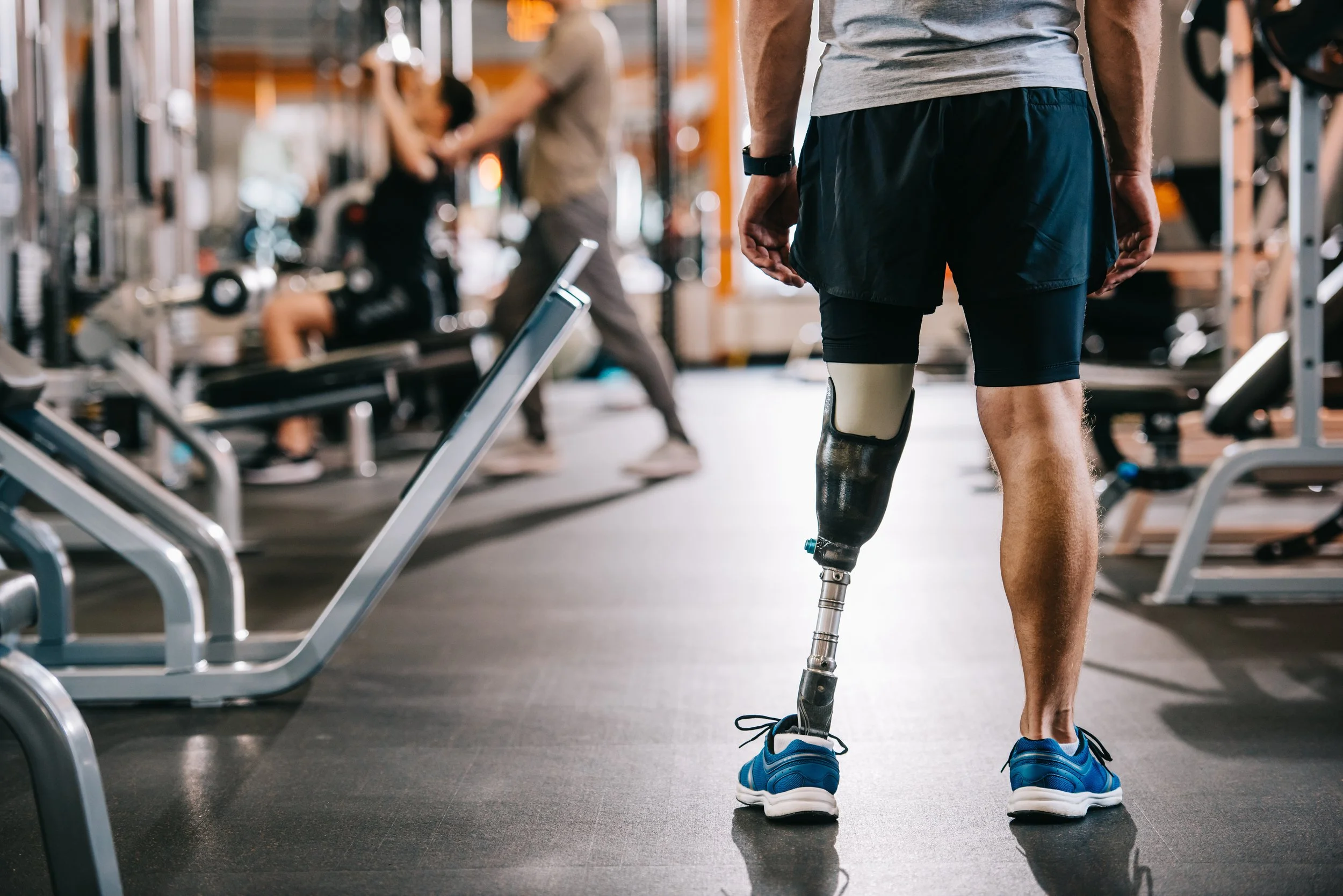
Whether you're preparing for your first prosthesis, adjusting to a new device, or wondering if it's time to replace an existing prosthesis, it's normal to have questions.
How much does a prosthetic leg cost? Will insurance cover it? How long will it last? What if your socket hurts or no longer fits? Can you exercise, drive, travel, or return to activities you enjoyed before amputation?
At Rise Orthotics and Prosthetics, we believe understanding your options is an important part of receiving the right care. Below are answers to some of the most common questions patients have about prostheses, including cost, insurance, fit, replacement, technology, and everyday life.
Important: Insurance coverage, prosthetic recommendations, recovery timelines, and functional outcomes vary from person to person. Your prosthetist and healthcare team can evaluate your individual needs and provide guidance specific to your situation.
1. How Much Does a Prosthetic Leg Cost?
The cost of a prosthetic leg can vary significantly depending on the type of prosthesis, the components selected, your individual needs, and your insurance coverage.
A basic prosthesis and a highly customized prosthesis with advanced components can have very different costs. A prosthesis may include a socket, suspension system, foot, knee, adapters, liners, and other components.
Your cost may also depend on:
Your insurance plan
Your deductible
Coinsurance
Whether your provider is in network
Prior authorization requirements
The components prescribed for you
Whether you're receiving a new prosthesis, replacement socket, repair, or component upgrade
Rather than relying on a general price you find online, ask your prosthetist to evaluate your needs and verify your insurance benefits. This can give you a much more realistic understanding of what your particular prosthesis and expected out-of-pocket costs may be.
2. Does Insurance Cover a Prosthetic Leg?
Many health insurance plans provide coverage for medically necessary prosthetic devices, but coverage varies by plan.
Medicare, Medicaid, and private insurance plans each have their own requirements. Your insurance may require a prescription, medical documentation, a prosthetic evaluation, and prior authorization before the device can be provided.
Insurance companies may consider factors such as:
Your medical condition
Your functional abilities
Changes in your residual limb
The condition and fit of your current prosthesis
Your daily activities
The medical necessity of the requested device or components
Coverage does not necessarily mean your prosthesis will cost you nothing. Your deductible, coinsurance, network status, and other plan requirements can affect your responsibility.
At Rise Orthotics and Prosthetics, we can help with the insurance and authorization process so you have a better understanding of your benefits before moving forward.
3. What Are the Signs That I Need a New Prosthesis?
Your prosthesis does not necessarily have to be completely broken before it may need to be replaced.
You may want to schedule an evaluation if:
Your socket no longer fits properly
Your residual limb has changed shape or volume
You're experiencing new or increasing pain
You're developing skin irritation or pressure areas
Your prosthesis feels loose or unstable
You are having difficulty walking
Your activity level has changed
You are having trouble doing activities you previously could do
Your components are worn or damaged
Your prosthesis requires frequent repairs
Your current device no longer meets your functional goals
A prosthetist can determine whether you may benefit from an adjustment, repair, replacement socket, replacement component, or an entirely new prosthesis.
4. How Long Does a Prosthetic Leg Last?
There isn't one expiration date that applies to every prosthetic leg.
The lifespan of a prosthesis depends on factors such as:
How frequently you use it
Your activity level
The type of components used
Changes in your residual limb
Normal wear and tear
How well the device is maintained
Whether your functional needs have changed
Some components may need attention or replacement before others.
Your socket, for example, may stop fitting properly because your residual limb changes even though the knee or foot is still functioning well.
Regular visits with your prosthetist can help identify wear, fit problems, and changes in your needs before they become bigger problems.
5. How Do I Know If My Prosthetic Socket Doesn't Fit Properly?
Socket fit is one of the most important parts of prosthetic comfort and function.
Signs that your socket may no longer fit correctly can include:
Pain while wearing the prosthesis
Pressure in one particular area
Redness or skin irritation
Sores or wounds
A feeling that your limb is moving inside the socket
Your prosthesis feeling too loose
Your prosthesis feeling too tight
Difficulty putting the prosthesis on
Changes in your walking pattern
Needing significantly more socks than you previously needed
Feeling unstable while walking
Your residual limb can change over time because of changes in swelling, activity, weight, muscle mass, and other factors.
If your socket isn't fitting the way it used to, don't simply assume you need to tolerate it. An evaluation can determine whether an adjustment, new liner, different suspension, or replacement socket may be appropriate.
6. Why Does My Prosthetic Leg Hurt?
Pain while using a prosthesis can have several possible causes.
One common issue is socket fit. If pressure isn't distributed properly, certain areas of the residual limb may experience excessive pressure or friction.
Other possible contributors include:
Changes in residual limb volume
Skin irritation
Poor alignment
Worn components
Improper suspension
Changes in activity level
Changes in gait
Nerve-related pain
Other medical conditions
Pain should not simply be considered something you have to live with.
If your prosthesis has become uncomfortable, tell your prosthetist exactly when the pain occurs, where you feel it, how long you've been experiencing it, and what activities make it better or worse.
Your prosthetist can evaluate the prosthesis and determine whether adjustments or other changes may help.
7. When Do I Need a New Prosthetic Socket?
A new socket may be appropriate when your existing socket no longer provides an appropriate fit or no longer meets your needs.
This can happen even when the rest of your prosthesis is still functioning properly.
Reasons for a replacement socket may include:
Significant changes in residual limb volume
Changes in residual limb shape
Persistent discomfort
Skin problems
Difficulty maintaining suspension
Changes in your functional needs
A socket that has become damaged
Changes in your activity level
A new socket may allow you to continue using functional components rather than replacing the entire prosthesis.
Your prosthetist can evaluate your current device and determine what needs to be replaced and what can continue to be used.
8. What Happens During a Prosthetic Evaluation?
A prosthetic evaluation is an opportunity for your prosthetist to understand both your physical needs and your goals.
Depending on your situation, the evaluation may include:
Reviewing your medical and amputation history
Examining your residual limb
Taking measurements
Evaluating your current prosthesis
Assessing your mobility
Discussing your daily activities
Discussing pain or skin concerns
Evaluating your current socket fit
Discussing your functional goals
Reviewing appropriate prosthetic components
Discussing insurance requirements
Your prosthetist may also ask about your home environment, work, hobbies, exercise, and other activities.
The goal isn't simply to determine what device you can use. It's to understand what you want your prosthesis to help you accomplish.
9. How Long After Amputation Can You Get a Prosthetic Leg?
There isn't one timeline that applies to every person.
Before receiving a prosthesis, your residual limb generally needs to heal sufficiently and your healthcare team needs to determine that you are ready for prosthetic fitting and rehabilitation.
The timing can be influenced by:
The level of amputation
Healing
Swelling
Skin condition
Overall health
Strength and mobility
Other medical conditions
Your rehabilitation progress
Your medical team can help determine when you're ready to begin the prosthetic process.
If you've recently undergone an amputation, you don't necessarily have to wait until you're completely finished with rehabilitation before learning about prosthetic options. Early communication with a prosthetist can help you understand what to expect as you move through recovery.
10. What Are the Different Types of Prosthetic Legs?
Prosthetic legs can be designed in many different ways.
The appropriate configuration depends on your amputation level, physical needs, functional abilities, lifestyle, and goals.
Common components include:
Prosthetic Socket
The socket is the part of the prosthesis that interfaces with your residual limb. Proper socket fit is critical to comfort, suspension, and function.
Prosthetic Foot
Different feet are designed for different levels of activity and different functional needs.
Prosthetic Knee
People with above-knee amputations may have several knee options available, including mechanical and microprocessor-controlled knees.
Suspension System
The suspension system helps keep the prosthesis securely connected to your residual limb.
Depending on your needs, options may include suction, vacuum-assisted suspension, pin-lock systems, or other approaches.
Your prosthetist can help determine which combination of components is appropriate for you.
11. How Long Does It Take to Get a Prosthetic Leg?
The process varies from patient to patient.
A prosthesis may involve several stages, including:
Evaluation
Measurements and casting or scanning
Socket fabrication
Component selection and assembly
Fitting
Alignment
Walking and functional assessment
Adjustments
Follow-up care
Insurance authorization can also affect the timeline.
Your first prosthesis may require several adjustments as you learn how it feels and as your residual limb changes. Follow-up appointments are an important part of the process.
The goal isn't simply to get you into a prosthesis as quickly as possible. It's to create a device that fits appropriately and supports your individual goals.
12. Does Medicare Cover a Prosthetic Leg?
Medicare Part B generally covers medically necessary prosthetic devices when they meet Medicare's coverage requirements and are ordered by a physician or other qualified healthcare provider.
Medicare generally requires patients to pay their applicable deductible and coinsurance for covered Part B services.
Coverage requirements can depend on the specific device, medical documentation, and individual circumstances.
If you have Medicare, it's important to understand that Medicare coverage and your actual out-of-pocket responsibility are not necessarily the same thing.
A Medicare Supplement plan or Medicare Advantage plan may have different cost-sharing and network requirements.
Your prosthetist's office can help you understand what information may be needed and work through the authorization process with your healthcare team.
13. What Is a Microprocessor Knee?
A microprocessor knee is a prosthetic knee that uses electronic sensors and computer-controlled systems to adjust how the knee responds during movement.
Unlike a purely mechanical knee, a microprocessor knee can continuously respond to changes in movement and walking conditions.
Depending on the specific technology and patient, these knees may provide features designed to support:
Walking on different surfaces
Changes in walking speed
Stability
Stair negotiation
Uneven terrain
Everyday mobility
Not everyone needs or is appropriate for the same type of prosthetic knee.
A prosthetist evaluates your mobility, environment, activity level, safety needs, and goals when determining which components may be appropriate.
14. Can You Walk Normally With a Prosthetic Leg?
Many people with lower-limb amputations are able to walk with a prosthesis and participate in a wide range of daily activities.
However, walking with a prosthesis is not exactly the same as walking with a biological limb, and outcomes vary considerably between individuals.
Your ability to walk comfortably and efficiently can depend on:
Amputation level
Strength and balance
Residual limb condition
Socket fit
Prosthetic components
Alignment
Rehabilitation
Previous mobility
Other health conditions
Practice and experience
Physical therapy and prosthetic training may be an important part of learning to use your device effectively.
If you've noticed that your walking has changed or become more difficult, an evaluation can help determine whether the issue is related to your prosthesis, fit, alignment, or another factor.
15. Can You Exercise With a Prosthetic Leg?
Many people with prosthetic legs participate in exercise, recreational activities, and sports.
The activities you can safely perform depend on your individual abilities, prosthesis, components, medical history, and level of training.
Depending on the individual, activities may include:
Walking
Hiking
Cycling
Strength training
Swimming
Golf
Running
Recreational sports
Other fitness activities
Some activities may require specialized prosthetic components or additional training.
If you want to return to a particular activity, tell your prosthetist about your goals. Your prosthetic team can help determine what equipment, adjustments, or training may be appropriate.
More Questions About Prosthetic Care?
Choosing and using a prosthesis is an ongoing process—not a one-time event.
Your residual limb can change. Your activity level can change. Your goals can change. And your prosthesis may eventually need an adjustment, repair, replacement socket, new component, or complete replacement.
If your current prosthesis is uncomfortable, no longer fits properly, or is preventing you from doing the things you want to do, a prosthetic evaluation can help identify your options.
Rise Orthotics and Prosthetics is here to help you understand those options and find prosthetic solutions designed around your individual needs and goals.
Contact Rise Orthotics and Prosthetics to schedule an evaluation or learn more about prosthetic care.
Contact Rise Orthotics and Prosthetics in Asheville, NC for more information.
Rise Orthotics and Prosthetics delivers custom orthotic and prosthetic care centered on you. Our approach blends patient‑centric care, collaborative teamwork, and creative problem‑solving to design solutions that fit your life and support your goals. CONTACT US
Located in Asheville, we proudly serve the greater Western North Carolina area, including Hendersonville, Waynesville, Black Mountain, Brevard, Marion, Morganton, Sylva, Weaverville and more.